
Why Standardising IT Equipment Is Critical for Growing Businesses in Ireland
- Kamran Hussain
- Feb 7
- 4 min read

Updated: Apr 21

As businesses grow, most leaders focus on hiring, sales, and expansion, but one critical area often gets overlooked: IT standardisation. In many growing organisations, IT equipment evolves organically. A laptop is purchased here, a desktop there, different brands, models, and specifications spread across teams. At first, this feels flexible. Over time, it becomes expensive, inefficient, and risky.
For growing businesses in Ireland, standardising IT equipment is not about limiting choice; it’s about creating consistency, control, and scalability. This guide explains what IT standardisation really means, why it matters for growth, and how working with a B2B-focused IT supplier like DataDirect helps businesses avoid hidden costs and operational friction.
What Does IT Equipment Standardisation Mean?
IT standardisation means using a defined set of approved devices, configurations, and specifications across the business. Instead of every employee using different hardware, the business adopts consistent standards for:
Laptops and desktops
Operating systems and configurations
Security features
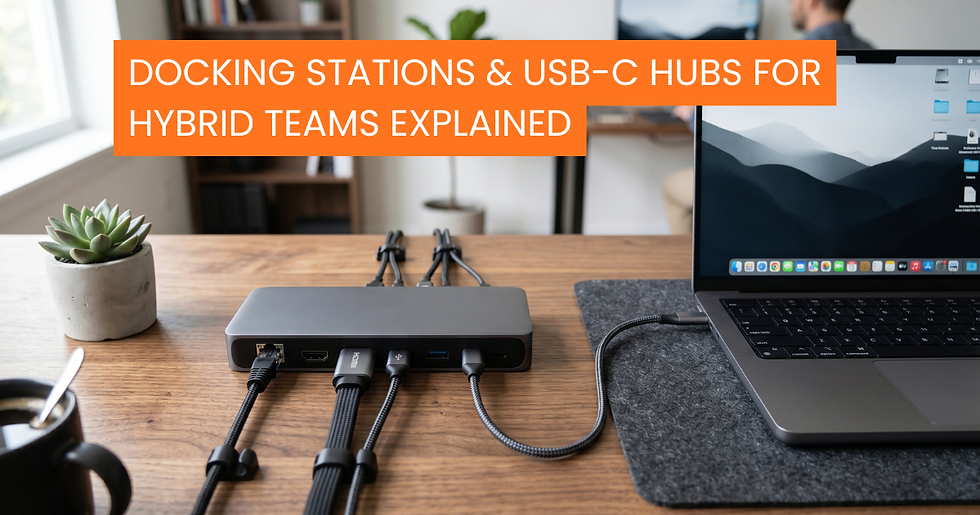
Accessories such as docking stations and monitors
This does not mean every employee has the exact same device but it does mean devices follow a controlled, compatible framework that supports efficiency and growth.
The Hidden Cost of Mixed IT Equipment
Many businesses don’t realise how expensive non-standard IT environments are until problems start appearing.
Increased Support and Maintenance Time
When every device is different, troubleshooting becomes complex. IT teams or suppliers must deal with:
Different drivers and compatibility issues
Inconsistent performance problems
Longer repair and setup times
This increases downtime and pulls attention away from strategic work.
Inconsistent Employee Experience
When employees use different devices with varying performance levels, productivity suffers. Some team members' experience:
Slower systems
Limited compatibility with tools
More frequent technical issues
This inconsistency impacts collaboration and morale.
Security Gaps
Security policies are harder to enforce when devices vary widely. Older or consumer-grade devices may:
Lacks modern security features
Miss firmware updates
Create weak points in the network
For growing businesses handling sensitive data, this increases risk significantly.
Why Standardisation Supports Business Growth

Faster Onboarding for New Employees
Growth means new hires. With standardised IT equipment:
Devices can be deployed quickly
Configurations are predictable
Security policies are applied consistently
New employees become productive faster, without IT delays.
Predictable IT Costs
Standardisation allows businesses to plan device lifecycles properly. Instead of reactive replacements:
Upgrade cycles become predictable
Budgeting becomes easier
Emergency purchases are reduced
This is especially valuable for SMEs managing cash flow.
Improved Security and Compliance
Standardised devices make it easier to:
Enforce encryption and authentication
Apply updates and patches consistently
Meet compliance and data protection requirements
Security becomes proactive instead of reactive.
Standardisation vs “One-Size-Fits-All”
A common misconception is that IT standardisation removes flexibility. In reality, good standardisation is structured — not rigid.
For example:
Different roles may have different performance tiers
Design or technical teams may need higher specifications
Remote and office workers may need different accessories
The key is that all devices still follow approved standards, ensuring compatibility and supportability across the business.
The Role of Lifecycle Management in Standardised IT
Standardisation works best when paired with lifecycle planning.
Lifecycle management ensures:
Devices are replaced before failure
Performance stays consistent across teams
Older devices don’t become security risks
Without lifecycle planning, businesses often keep devices too long, leading to sudden failures and unexpected costs.
Why Consumer IT Undermines Standardisation
Many growing businesses attempt to standardise using consumer-grade devices because they appear cheaper upfront. This often backfires.
Consumer IT typically offers:
Shorter support lifecycles
Limited security features
Inconsistent build quality
Business-grade equipment, on the other hand, is designed for:
Long-term use
Centralised management
Professional security standards
For standardisation to work effectively, business-grade IT is essential.
How Standardised IT Improves Hybrid and Remote Work
Hybrid work adds another layer of complexity. When employees work across locations, standardisation becomes even more important.
Standardised hybrid IT ensures:
Consistent remote access
Secure connectivity from any location
Fewer compatibility issues with collaboration tools
Employees can move between home and office without disruption.
Why Irish Businesses Benefit from Local B2B IT Partners
Standardising IT is not just a technical task — it’s a strategic one. This is where local B2B IT suppliers add real value.
For Irish businesses, working with a trusted supplier like DataDirect provides:
VAT-compliant purchasing
Local support and faster response times
Knowledge of Irish business requirements
Long-term account management
Rather than selling individual devices, a B2B partner helps design an IT standard that supports business goals.
Standardisation as a Foundation for Scaling
Businesses that plan to grow, whether through hiring, new locations, or hybrid working, need systems that scale smoothly.
Standardised IT:
Reduces friction during expansion
Keeps performance consistent
Lowers operational risk
Supports long-term growth strategies
Instead of constantly fixing problems, leadership teams can focus on strategy and innovation.
How DataDirect Supports IT Standardisation
At DataDirect, we work with businesses across Ireland to build standardised IT environments that are practical, secure, and scalable.
Our approach includes:
Assessing current IT environments
Defining equipment standards aligned with growth plans
Implementing lifecycle management
Providing ongoing support and guidance
This ensures IT becomes a business enabler — not a recurring challenge.
Conclusion

Standardising IT equipment is not about control it’s about clarity. For growing businesses, it creates consistency, reduces risk, and simplifies operations.
By moving away from mixed, reactive IT purchasing and toward structured standardisation, businesses gain:
Better productivity
Lower long-term costs
Stronger security
Smoother growth
With the right planning and a trusted B2B IT partner, standardised IT becomes one of the strongest foundations for sustainable business growth.
Frequently Asked Questions
1. What does IT equipment standardisation mean?
It means using approved, consistent devices and configurations across the business to improve efficiency and support.
2. Is IT standardisation suitable for small businesses?
Yes. Even small teams benefit from reduced support issues and predictable IT costs.
3. Does standardisation reduce flexibility?
No. It allows controlled flexibility while maintaining compatibility and security.
4. Why is business-grade hardware important for standardisation?
Business-grade hardware offers better security, durability, and longer support lifecycles.
5. How can a B2B IT supplier help with standardisation?
They provide planning, device standards, lifecycle management, and ongoing support aligned with growth.



Comments